Most companies have added AI tools. Fewer have figured out what to do with them. AI ROI is the measurable business value an organization generates from its AI investments, relative to what it spends on tools, implementation, and training. Most businesses haven’t seen that return yet, and the reason isn’t the tools. The workflows built around them simply haven’t changed.
If you're responsible for whether AI investment pays off, whether that's as a business owner, an ops lead, or a team manager, this is the framework for making that case.
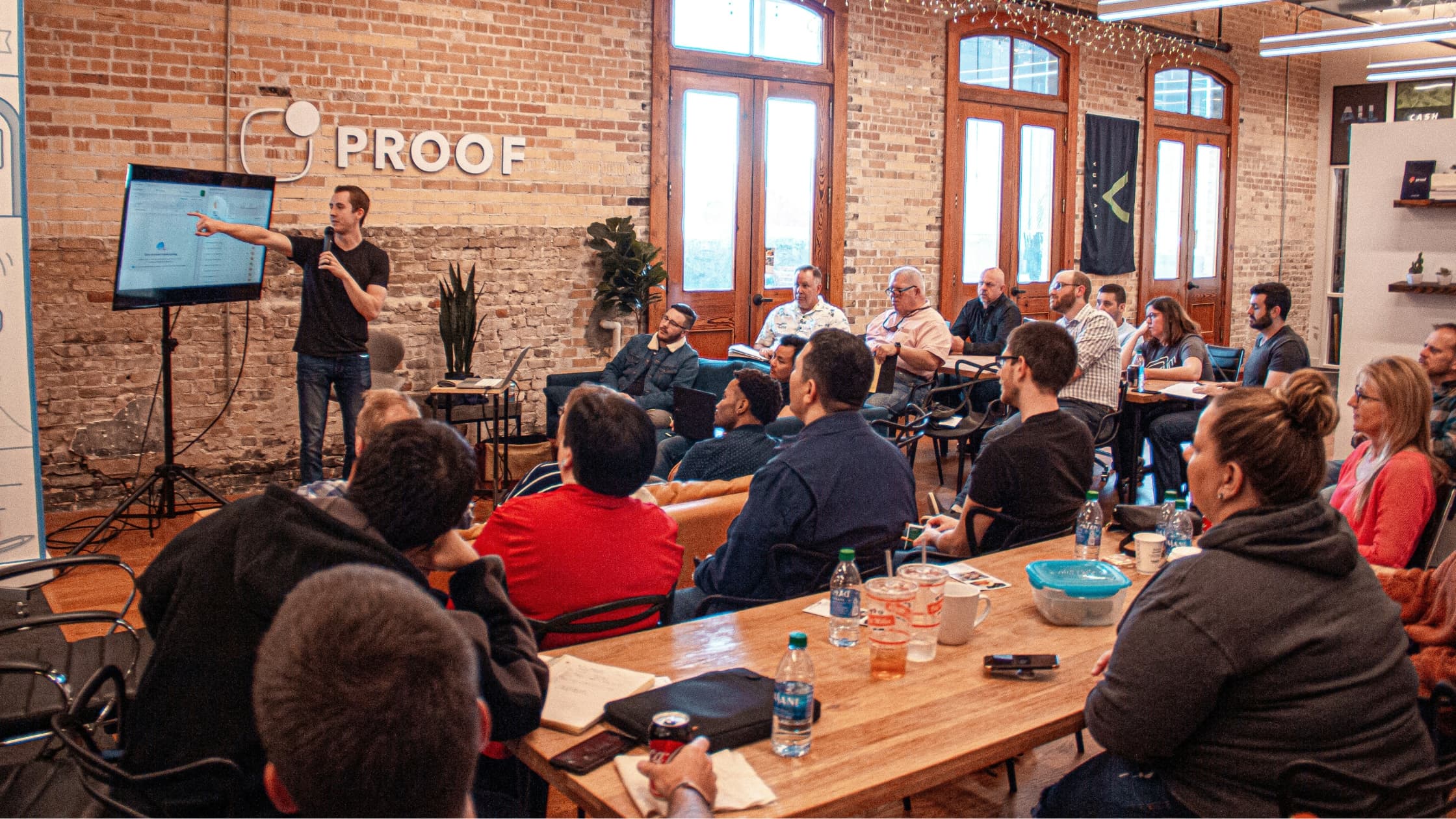
We spoke withDr. Ronnie Chatterji, Chief Economist atOpenAI, to talk through exactly this problem. In a webinar hosted by Fyxer's CEO and co-founder Richard Hollingsworth, Dr. Chatterji made a point that most business leaders aren't ready to hear: the gap between what AI feels like on the ground and what shows up on the balance sheet comes down to how companies are measuring it, and what they're actually trying to achieve.
What is the ROI of AI?
AI ROI is the measurable business value an organization generates from its AI investments, relative to what it spends on those tools, implementation, and training.
That definition sounds simple. In practice, it's not.
According toOpenAI's State of Enterprise AI 2025 report, ChatGPT Enterprise users save an average of 40 to 60 minutes per active workday, with workers in data science, engineering, and communications reporting gains of up to 80 minutes daily. 75% say AI has improved either the speed or quality of their output.
Most companies are measuring the first. The ones seeing genuine returns have moved to the third.
Why 96% of companies aren't seeing AI ROI
Here's the number that should give every business leader pause.
According toAtlassian's 2025 AI Collaboration Index, which surveyed 180 Fortune 1000 executives and 12,000 knowledge workers, 96% of organizations are struggling to reap organizational efficiency and innovation gains from AI, costing the Fortune 500 $98 billion annually in lost returns on AI investments.
Workers reported that AI makes them 33% more productive and saves them an average of 1.3 hours per day, but the wider business impact has yet to materialize.
So why is there such a persistent gap between what individuals experience and what organizations can prove?
Dr. Chatterji put it plainly in our recent webinar: most companies have fallen into what he calls the "microproductivity trap."
"I might speed up my market research report," he explained, "but if you don't change your process, all my increased productivity doesn't drive as much business value as it could."
In other words, AI makes one person faster. But if the people and systems around them haven't changed, the efficiency gain stops there.
The workflow problem
Atlassian's data shows that 76% of leaders see driving personal productivity as the number one indicator of whether AI investment is paying off. But that approach makes them 16% less likely to drive innovation than the 4% who are seeing organization-wide transformation.
Personal productivity gains are real, but they stop at the individual. Business value requires something more. A sales rep who drafts emails twice as fast still needs a process built around that speed. A team that writes faster meeting notes still needs someone to act on them.
While organizations are seeing isolatedAI-enabled productivity gains, the vast majority report that these gains have not translated to company-wide transformation.
The companies seeing real ROI have gone back to first principles, redesigning their workflows around AI rather than layering it on top of what already exists.
How to measure AI productivity at work
Measuring AI ROI means thinking in terms of outputs, not just inputs.
Time saved is a useful starting point. But the more important question is: what does that time get reinvested into? And is that reinvestment producing something measurable?
Here's a practical framework for measuring AI productivity across three stages.
Stage 1: Baseline your current state
Before you canmeasure AI impact, you need to know where you're starting. That means tracking:
How long key tasks take before AI (email responses, meeting summaries, report drafts)
How many hours per week are spent on administrative work
Your current conversion rates, response times, or customer satisfaction scores; whichever metrics matter most to your business
Fyxer'sAdmin Burden Index report found that employees lose 5.6 hours per week to admin that could be handled by AI, with email ranked as the number one time-waster. That's a useful starting baseline for any business introducing anAI email assistant.
The same research found that office workers receive an average of 29 emails per day requiring a response, making inbox management the single biggest drag on productive time.
Stage 2: Set targets tied to business objectives
Vague goals produce vague results. Instead of "improve efficiency," set specific, quantifiable targets. For example:
Reduce average email response time from 4 hours to 1 hour
Cut meeting note preparation from 30 minutes to zero
Increase the volume of outbound sales emails sent per week without adding headcount
Dr. Chatterji's advice: "You really want to ask yourself, is it creating business value?" Time saved isn't the end goal. It's a means to one.
Stage 3: Track outcomes, not just activities
This is where most businesses under-invest. Outcome metrics vary by team:
Finance and accounting: Invoice processing time, error rates in data entry, time spent on month-end reporting, hours saved on reconciliation tasks
Recruiting and HR: Time-to-hire, volume of candidate communications handled
Legal and compliance: Contract review turnaround time, volume of standard documents drafted without outside counsel, time spent on policy updates and internal communications
Operations teams: Hours recovered per week, reduction in turnaround time, cost per task
Marketing: Content output volume per person, time from brief to first draft, campaign turnaround speed, reduction in time spent on reporting and performance summaries
Executive assistants and chiefs of staff: Volume of emails triaged and actioned without escalation, time saved on meeting preparation and follow-up, reduction in scheduling back-and-forth
IT and technical support: Ticket resolution time, volume of issues handled without escalation, time spent drafting internal documentation and user guides
Project management: Time saved on status update communications, reduction in meeting prep time, speed of post-meeting action item distribution
Product and engineering: Time from meeting to documented decision, reduction in administrative overhead per sprint, hours recovered from internal email and update threads
Atlassian's research shows that strategic AI collaborators see 2x the ROI of simple users, and enterprise organizations that partner with AI for enhanced decision-making can achieve an ROI of $129.4 million annually, compared to just $65.1 million when AI is used for task-specific purposes.
That’s a $64 million difference in annual ROI, from the same technology. The variable is how deliberately organizations have chosen to use it.
How do you measure the ROI of AI in operations?
Operational ROI is often the easiest to quantify because it maps directly to time and cost.
Start by identifying your highest-frequency, lowest-value tasks. These are the admin processes that eat hours without generating revenue: inbox management, meeting follow-ups, report formatting, status update emails.
Fyxer's research found that US office workers lose 66 minutes per day to admin (that's 5.6 hours every week) with email accounting for the biggest share. Across a team of 50, that's the equivalent of more than four full-time employees lost to administrative work every single week.
From there, the ROI calculation is relatively straightforward:
Hours recovered x average hourly salary = recoverable cost
Email is a good place to start. It's where most admin time goes, and where tools like Fyxer's AI email organizer tend to show the fastest return. If a 20-person team each gets back 45 minutes a day, at an average salary of $60,000 per year, the recoverable value adds up to roughly $450,000 annually, before you factor in what that time actually gets used for.
Speed is easy to measure. Whether the output actually improves what happens next (conversion rates, client response rates, follow-through on action items) is where most measurement stops.
Does an AI email response generator produce replies that convert better? Do AI-generatedmeeting notes lead to faster follow-through on action items? Those outcomes require tracking, but they're the numbers that move the needle at board level.
Measuring AI ROI for small businesses
Largeenterprises have research teams and dedicated data scientists to model AI impact.Small businesses don't, and they don't need to.
The case for measuring AI ROI at a smaller scale is actually simpler. Fewer people means tighter feedback loops. You can see change faster.
Dr. Chatterji explained that small and growing businesses have a structural advantage here: they can build AI-native workflows from the ground up, without the change management burden that slows down legacy organizations.
"For someone who's built from the ground up and scaled as an entrepreneur, you can build those workflows from the ground up with AI, and that gives you a tremendous advantage."
For small businesses, a practical approach to measuring AI ROI looks like this:
Pick one workflow: Don't try to measure everything at once. Start with email, or meeting follow-ups, or sales outreach. Master one, then expand.
Measure before and after: Set a two-week baseline before introducing an AI tool, then track the same metrics for two weeks after.
Ask the right question: Every hour recovered from admin is an hour that has to go somewhere. Tracking where it goes is where real ROI measurement begins. If it's going toward higher-value work, that's ROI. If it's being absorbed back into admin, you haven't changed the workflow enough.
A small sales team that uses anAI sales email generator to double its outbound volume without hiring has moved well beyond time savings. That's pipeline, directly influenced by AI. That's measurable, and it compounds.
ROI of AI in strategic workforce planning
One of the most underused applications of AI ROI measurement is workforce planning.
BCG's 2025 analysis found that companies classified as "future-built" for AI achieve 1.7x revenue growth, 3.6x three-year total shareholder return, and 1.6x EBIT margins compared to laggards. Only 5% of firms worldwide qualify as future-built, while 60% report minimal revenue and cost gains despite substantial investment.
The performance gap between AI leaders and laggards traces back to organizational decisions, not technological ones. How people and AI work together is what separates the two groups.
Strategic workforce planning with AI means asking which tasks should be handled by people, which should be AI-assisted, and which can be largely automated. Email is the clearest example. Reading, triaging, drafting, and routing email is work that takes up an enormous share of every professional's day. AnAI email writer like Fyxer can be a great starting point, but it won’t entirely replace the judgment involved in a sensitive client response. But it can handle the volume, leaving the human to focus on what requires real thought.
IBM research found that nearly half of surveyed companies (47%) have already achieved positive ROI from their AI investments, with companies using open-source AI tools reporting positive ROI at a higher rate than those that don't. The common thread across those success stories is specificity: companies that defined clear use cases saw results. Those that deployed broadly without a plan did not.
The mistakes that stall AI ROI
Knowing what doesn't work is as useful as knowing what does. Dr. Chatterji identified several patterns that reliably predict AI adoption failures.
No senior sponsorship: When AI is driven by junior teams without visible leadership buy-in, momentum stalls. Every AI initiative at Lowe's, he noted, has a senior vice president-level business sponsor. That accountability structure is part of why their rollout has worked.
Measuring the wrong things: If the only metric is time saved, the executive question inevitably becomes: "So what?" Metrics need to map to business objectives. Win rates, customer satisfaction, and revenue growth are harder to track but far more persuasive.
Dropping AI into broken workflows: A broken process, automated, is just a faster broken process. The goal is to redesign the process around AI, not bolt AI onto the existing one.
Expecting a straight line: Economists describe a "productivity J-curve" when organizations adopt general-purpose technologies. There's often a dip before the gains materialize, because real change takes time to embed. Companies that give up after the dip miss the return.
What the 4% of businesses using AI are doing differently
The companies seeing meaningful AI ROI are doing a handful of things consistently:
They're picking a few workflows and going deep, rather than spreading AI thin across every function. They're redesigning those workflows end to end rather than layering AI on top. They're measuring against business baselines they've been tracking for years. And they're involving the people who do the work in how the tools get used.
According to Atlassian, nearly all Stage 4 AI collaborators (94%) agree that the time they spend learning to work with AI pays off, compared to just 59% of Stage 1 AI users.
Better tools are available to almost everyone. The harder thing, and the thing that actually drives returns, is the readiness to change how work is structured around them.
For most knowledge workers, that starts with the inbox. Email is the highest-volume, lowest-value use of professional time in most organizations. An hour recovered from email admin every day is only valuable if it goes somewhere. The businesses seeing real AI ROI are the ones that have decided in advance where that time goes.
AI ROI follows the workflow, not the tool
AI is generating real time savings for individuals, but most organizations aren't seeing that translate into business results. Measuring time saved is a reasonable first step. Building a business case on it alone is where most AI ROI strategies run out of road.
The companies making progress are the ones connecting AI outputs to business outcomes, redesigning workflows rather than patching them, and building habits of measurement that go beyond adoption rates. For small businesses, the math is more direct than it looks: pick one process, set a two-week baseline before introducing any tool, and track what changes. One workflow done properly makes the case for everything that follows.
Frequently asked questions about AI ROI
How long does it take to see AI ROI?
It varies by use case and how deeply the workflow has been redesigned. Individual time savings can appear within days. Broader business impact typically takes 3 to six 6 to show clearly in the data. Organizations that redesign workflows rather than just adopting tools tend to see returns faster.
Should AI ROI be measured at the individual or organizational level?
Both, but for different reasons. Individual measurement helps identify where AI is being used well and where it's being underused. Organizational measurement is what justifies continued investment and informs decisions about where to deploy AI next. The two levels need to be connected: individual gains only show up organizationally when they're part of a redesigned workflow.
What role does employee adoption play in AI ROI?
Adoption is the precondition for everything else. An AI tool that sits unused has no ROI. Organizations that actively encourage their teams to use AI across a range of tasks, rather than one specific use case, tend to see compounding gains. Dr. Chatterji's research showed that workers who apply AI to around seven different task types report five times more time savings than those who stick to four.
How do you calculate the cost of not adopting AI?
Start with the hours your team currently spends on tasks that AI could handle. Multiply that by average salary cost. Then consider the opportunity cost: what would those people be doing if that time were freed up? Fyxer's Admin Burden Index found that avoidable admin costs US and UK organizations a combined $954 billion every year. That's the baseline cost of inaction, before factoring in the competitive disadvantage of slower peers moving faster.
Can AI ROI be negative?
Yes, and it's more common than organizations admit. Poorly implemented AI can create new problems: inconsistent outputs that require additional review, tools that don't integrate with existing systems, or adoption programs that frustrate teams without delivering results. Negative ROI is most likely when AI is introduced without clear use cases, without leadership support, or without changing the workflow around it.
How do I make the business case for AI investment internally?
Lead with a specific problem, not a general capability. "We spend over 5 hours per week per person on email admin" is a more compelling starting point than "AI can improve productivity." Attach a cost to the problem, propose a measurable target, and suggest a time-bound pilot with defined success metrics. That structure gives decision-makers something concrete to approve, and gives you something concrete to report back on.